






Why Approved Document E Is Failing Quiet Homes (and What ISO/TS 19488 Fixes)
Approved Document E (ADE) of the Building Regulations sets the legal baseline for sound insulation in dwellings. But in practice, ADE’s targets are minimal—designed to ensure “reasonable resistance” rather than genuine acoustic comfort.
ADE’s separating element requirements (e.g., DnT,w + Ctr ≥ 45 dB for walls; L’nT,w ≤ 62 dB for floors in new builds) have barely changed since 2003. They are sufficient for compliance, but surveys and resident feedback consistently highlight dissatisfaction with noise transfer, low-frequency thuds, and traffic ingress in homes that meet ADE.
By contrast, ISO/TS 19488:2021 Acoustics – Acoustic classification of dwellings introduces a graded system (Classes A–F) covering airborne, impact, façade, and building services noise. Each class step equates to an audible difference (around 4 dB increments for airborne/impact insulation). ADE’s minimums sit roughly at the lower end of this scale(Classes D/E), meaning that a compliant building may still perform poorly in real-world conditions.

[edit] Why this matters
- Performance vs perception: Compliance doesn’t guarantee comfort; occupants experience a clear difference between ADE minimums and higher ISO/TS classes.
- Holistic coverage: ADE deals primarily with walls, floors and reverberation; ISO/TS integrates façade and services noise into a single framework.
- Future-proofing: With urban densification and mixed-use developments, acoustic quality is increasingly critical to health, wellbeing, and marketability.
[edit] Moving forward
Design teams can adopt ISO/TS class targets early in design stages (e.g., aiming for Class B or better) to protect acoustic quality through procurement and value engineering. While ADE remains the statutory minimum, ISO/TS provides a clearer language for quality and a pathway to homes that are not just compliant, but genuinely quiet and beneficial for human health.
Have a question about this article? Please get in touch with us, or email us at: [email protected]
--Polarisacoustics 18:40, 30 Aug 2025 (BST)
Featured articles
Check out some of the best features and news from Designing Buildings as well as key stories from around the web.
Listed structures on the rail network
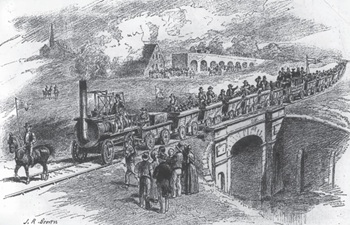
Heritage interests and operational requirements must be balanced.
Historic England publishes research into embodied carbon when retrofitting traditional buildings.

New Prime Minister delivers on ECA call for cut in electricity costs.

CIOB reacts to the announcement of Andy Burnham as Prime Minister.

Heritage and conservation science workforce survey - Have your say.
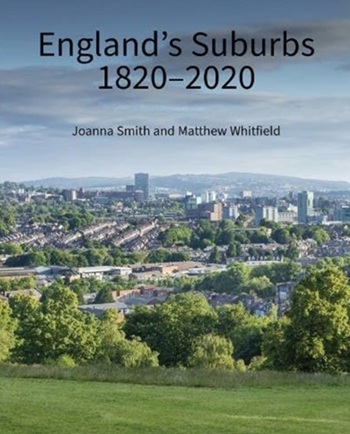
England's Suburbs 1820-2020. Book review.

New, more proportionate and targeted approach for higher-risk building assessments.

Government brings British Steel into public ownership.

UKCW Birmingham returns with bold new theme and focus.

New guidance published on competence requirements for self-certification schemes.
Construction Management, 8 July

NEETs crisis drives interest in trades, but apprenticeships barriers remain.
Passive fire protection webinar
MEP services penetration seals.